Barycz Valley Biodiversity Campus
Living labs for co-creating solutions for the restoration of ecosystems

Living labs for co-creating solutions for the restoration of ecosystems

The Barycz Valley Biodiversity Campus will provide a field-based environment for studying one of Central Europe’s most distinctive cultural and natural landscapes. The Barycz Valley encompasses an exceptional mosaic of fishponds, reedbeds, rivers, wet meadows, forests and agricultural land. Centuries of traditional pond management have created habitats of international importance, particularly for waterbirds, aquatic plants and wetland species.
The Campus will enable students and researchers from European universities to combine field observations with laboratory analysis. Its location in Krośnice provides direct access to the Barycz Valley Landscape Park, the Milicz Ponds Nature Reserve, Natura 2000 sites and a wetland protected under the Ramsar Convention.

Research activities at the Campus will focus on the relationships between biodiversity, water, climate and human land use. Priority areas will include:

The Campus operate as a living laboratory in which students participate in the complete research process: formulating questions, designing fieldwork, collecting samples, identifying species, analysing data and presenting results. Projects may range from short field courses to multi-year monitoring programmes continued by successive international student groups.
Research methods may include vegetation surveys, bird counts and ringing, acoustic monitoring, camera trapping, insect sampling, water and soil analysis, microscopy, molecular identification, GIS mapping, remote sensing and statistical modelling. The Campus’s existing digital and educational infrastructure will support data analysis, seminars and hybrid collaboration with partner universities.
Particular emphasis will be placed on repeatable methods and comparable data. This will allow each student cohort to contribute to a growing record of environmental change in the Barycz Valley.

The Campus seek partnerships with universities, research institutes, nature conservation authorities, forestry services, fishpond managers and local organisations. The knowledge of people who work in the landscape will complement academic research and help identify questions relevant to both science and practical conservation.
All activities will follow applicable environmental regulations, research ethics and animal welfare requirements. Fieldwork will be designed to minimise disturbance, especially within protected areas and during sensitive breeding periods. Where possible, results will be made available through open datasets, student reports, scientific publications and practical recommendations for local stakeholders.
By connecting education, research and conservation, the Barycz Valley Biodiversity Campus aims to become a European platform for understanding and protecting wetland landscapes—and for training a new generation of scientists capable of working across disciplines, institutions and national borders.

The Barycz Valley Biodiversity Campus is located in an approximately 1,000 m² building in Krośnice, with around 0.5 hectares of adjoining land. It is designed as a residential field-study centre where students, lecturers and researchers can live, learn and work together in direct contact with the landscapes of the Barycz Valley.
The building provides space for teaching, seminars, group work, accommodation and basic laboratory activities. Shared learning areas can support lectures, workshops, data analysis and online collaboration with partner universities. The available equipment includes an interactive display, a multimedia projector and screen, mobile whiteboards, a flipchart and printing facilities.
The Campus also has night-vision observation equipment for evening and nocturnal fieldwork. A Bambu Lab X1 Carbon 3D printer can be used to produce sensor housings, camera-trap accessories, sampling components, identification aids, replacement parts and prototypes developed during student projects.
A dedicated fieldwork zone is planned for preparing expeditions, storing protective clothing and sampling equipment, charging electronic devices and processing material brought back from the field. This will help students maintain a clear workflow between field collection, initial documentation, laboratory examination and data analysis.
The laboratory area is intended to include refrigeration facilities reserved exclusively for scientific and teaching purposes and kept separate from food storage. Laboratory refrigerators operating at approximately 2–8°C will allow the short-term storage of water samples, plant material, selected biological specimens and temperature-sensitive reagents. Freezer capacity at approximately –20°C will support the temporary preservation of samples awaiting identification, chemical analysis or transfer to a partner laboratory.
Samples will be labelled, registered and stored in designated containers according to their type and research protocol. Temperature monitoring and documented sample-handling procedures will help maintain an appropriate chain of custody and reduce the risk of contamination or loss of research material. The Campus’s photovoltaic panels, energy storage system and associated electrical infrastructure can contribute to the continuity of essential refrigeration during short interruptions in the external power supply.
These facilities are intended for teaching-scale ecological research and short-term sample preservation. Specialist analyses, long-term biobanking and work requiring ultra-low-temperature storage or advanced biosafety conditions will be carried out in cooperation with appropriately equipped university laboratories.
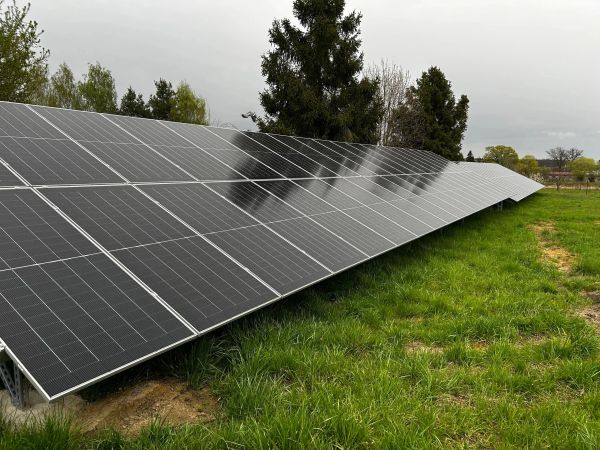
The Campus is supported by photovoltaic panels, an energy storage system and a heat pump. Together, these installations reduce dependence on conventional energy sources and provide a practical demonstration of lower-emission infrastructure.
A rainwater collection tank with a capacity of 18 cubic metres is also located on the Campus grounds. The collected water will be used to irrigate experimental plant specimens and research plots, reducing the use of drinking water and supporting studies of plant growth, water efficiency and responses to different environmental conditions.
These systems can become part of student projects examining renewable energy production, energy and water consumption, building performance, rainwater reuse and the relationship between research facilities and environmental sustainability..